Screen-Based
AI Clinical Simulation
Photo-real virtual patients. Real clinical decisions. Anywhere your learners are.
Practice high stakes clinical conversations with AI-powered virtual patients who think, remember, and emotionally adapt in real time, without scheduling constraints or patient risk.
Clinical Readiness Is Hard to Scale
Nursing programs and healthcare systems face increasing pressure to prepare clinicians for complex, emotionally charged care environments, while also managing other constraints.



Patient Ready Screen-Based simulation scales realistic AI-powered virtual patient encounters while providing measurable visibility into learner performance and readiness.

A Lifelike, Emotionally Responsive Virtual Patient Experience
Learners speak naturally. The photo-real virtual patient responds in real time, adapting to tone, empathy, and clinical decisions.
This is not scripted branching. It mirrors real patient behavior, including resistance, trust-building, and escalation. Learners build confidence through safe, repeatable practice before those moments happen in live care.
Practice That Translates to Real Care
Confidence is built by navigating uncertainty. Not by memorizing scripted responses.
With Patient Ready AI Screen-Based Simulation:
Learners strengthen clinical judgment and critical thinking across care contexts
Communication skills develop through safe, repeatable practice
Programs gain consistent performance signals across cohorts and units
Health systems scale readiness without increasing operational burden

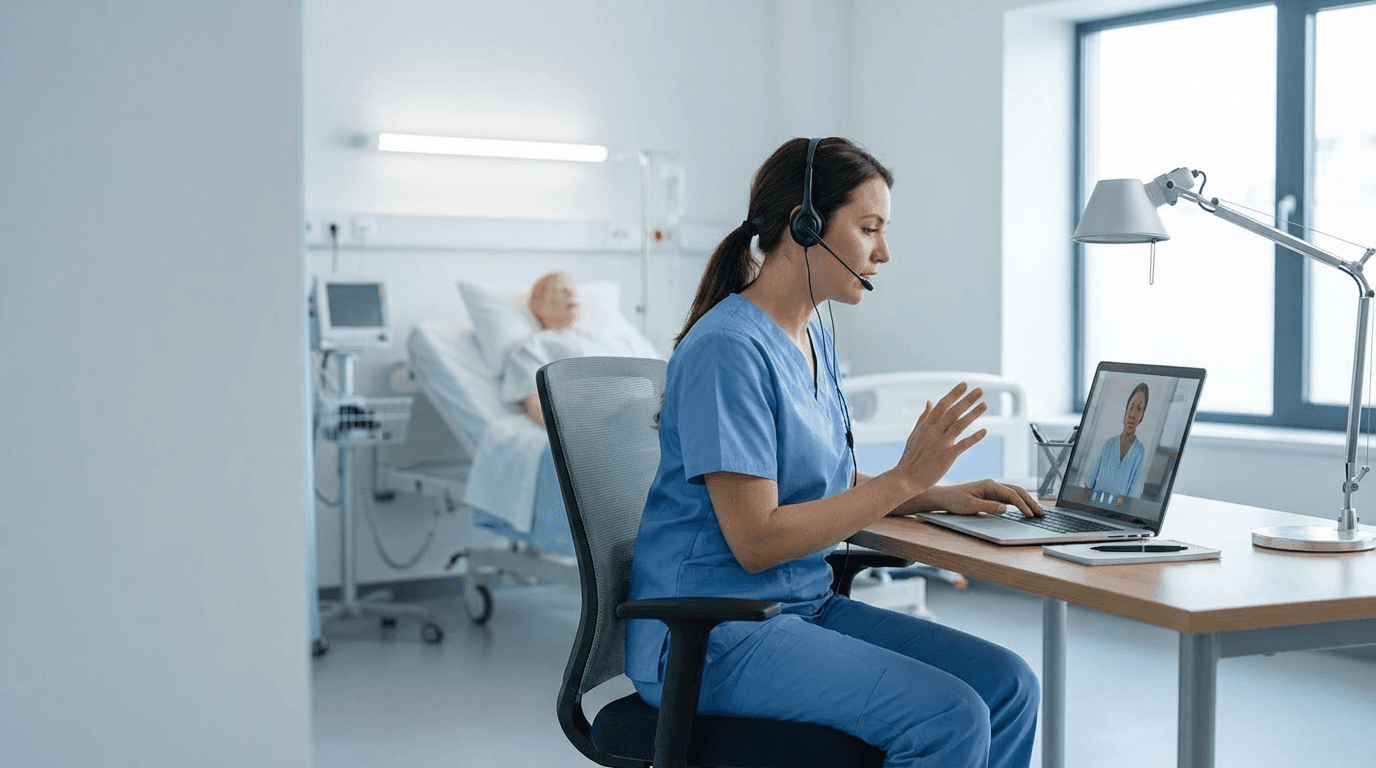
Built for Clinical Education and Healthcare Systems
Academic programs expand exposure beyond limited clinical placements and support Next Gen NCLEX clinical judgment development without increasing simulation lab demand.
Health systems standardize communication expectations, support onboarding, and prepare clinicians for high-risk interactions through safe, repeatable practice.
One Platform. Two Modalities.
Patient Ready delivers emotionally responsive AI patients across immersive VR and Screen-Based simulation. Both provide measurable performance insight and competency-aligned scenarios designed for modern nursing education and healthcare training.
Interested in Use Beyond Healthcare?
The same emotionally responsive AI simulation technology is being deployed across industries where high-stakes human interaction drives outcomes, including: