What National Nurses Week Means to Patient Ready
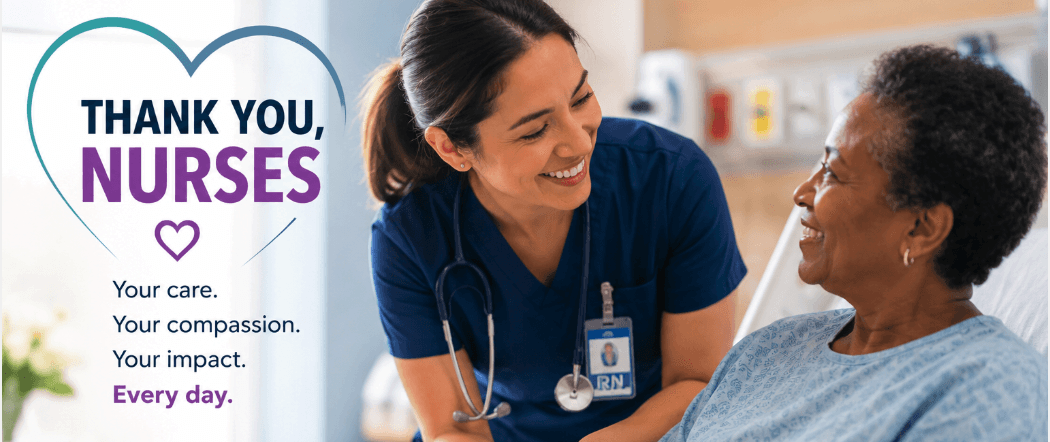
What National Nurses Week Means to Patient Ready
Each year, National Nurses Week highlights the essential role nurses play across the healthcare system. Recognized from May 6 to May 12, the week aligns with the birthday of Florence Nightingale and serves as both a celebration of the profession and a broader acknowledgment of its impact on patient care, safety, and outcomes.
But in 2026, recognition alone is not enough.
The U.S. continues to face sustained pressure on its nursing workforce, from staffing shortages to burnout to increasing clinical complexity. At the same time, the pathway into the profession is facing new uncertainty. Recent shifts in how educational programs are categorized and funded have raised concerns about access to federal financial support for some nursing students. While policies continue to evolve, the broader issue is clear: at a moment when the system needs more nurses, barriers to entry cannot be an afterthought.
That tension should reshape how we think about this week.
The Gap No One Talks About Enough
Nurses are expected to step into environments where decisions carry real consequences from day one.
They are not only responsible for clinical accuracy, but for how care is delivered. How they communicate. How they respond under pressure. How they recognize subtle changes before they become critical.
And yet, much of traditional training still prepares them for what to do, not how it actually unfolds.
Patient Ready was born out of a BSN program where this gap was impossible to ignore. Students understood the material. They could pass exams. But the first time they encountered a resistant patient, an emotional family member, or an ambiguous clinical situation, the experience was fundamentally different from anything they had practiced.
That moment, the gap between knowing and doing, is where readiness breaks down.
Why Human Skills Are Now Clinical Skills
The most defining moments in care are rarely procedural. They are moments of judgment, communication, and trust.
A patient who hesitates to share critical information can change the trajectory of care. A conversation that escalates instead of de-escalates can impact safety. A missed cue can delay intervention. These are not edge cases. They are everyday realities that shape outcomes.
This shift is now reflected in how the profession itself is evolving. Frameworks like the Next Generation NCLEX are placing greater emphasis on clinical judgment, prioritization, and decision-making under real-world conditions.
The expectation has changed. Training needs to follow.
From Simulation to True Preparation
Healthcare has long relied on simulation, but not all simulation prepares nurses for reality.
Static scenarios and scripted responses can build familiarity, but they rarely capture the unpredictability of human interaction. Real patients do not follow scripts. They respond, react, and change based on what is happening in the moment.
That is where a new category of training is emerging.
At Patient Ready, the focus is on immersive, AI-powered scenarios where patients, families, and care teams think, respond, and adapt in real time. Conversations shift. Emotions escalate or de-escalate. Information is incomplete, just as it is in practice.
This allows nurses to practice the moments that are hardest to teach, navigating resistance, building trust, making decisions with incomplete information, and maintaining composure under pressure, not once, but repeatedly, before they encounter them in real care settings.
Why This Matters for Health Systems Now
This is not just an education issue. It is a workforce and system performance issue.
Health systems are under increasing pressure to onboard nurses quickly, ensure consistency across units, and reduce variability in care. At the same time, turnover remains costly, and confidence gaps can impact both performance and retention.
Preparing nurses for real-world interaction earlier has meaningful implications for how quickly they can step into their roles, how consistently care is delivered, and how supported they feel in high-stakes environments. These factors are increasingly tied not only to patient outcomes, but to the stability of the workforce itself.
Readiness is no longer a downstream outcome. It is something that must be built intentionally.
Recognition Should Lead to Investment
National Nurses Week is an important moment to recognize the profession. But recognition alone does not solve the challenges nurses face.
If the industry is serious about supporting nurses, it needs to invest in how they are prepared for the realities of the role, not just the requirements of the curriculum.
For Patient Ready, this is not a new idea. It is the foundation. From our origins in a BSN program to our work with health systems today, the focus has remained the same: helping nurses step into real-world care with greater confidence, consistency, and readiness.
Because in healthcare, readiness is not theoretical.
It shows up in moments. And those moments shape everything.